3rd –7th August 2026 | Savoy Seychelles Resort & Spa, Beau Vallon
The Seychelles Maritime Academy (SMA) continues to strengthen the professional capacity of its staff through participation in specialised training programmes that support continuous learning, professional development and the application of internationally recognised standards.
From 3rd to 7th August 2026, Mr. Vivek M. Vasu and Ms. Camilla Labonte participated in an intensive five-day training programme on ISO 22000:2018 Food Safety Management Systems (FSMS). The training was organised by the Seychelles Fisheries Authority (SFA) and delivered by BSI South Africa at the Savoy Seychelles Resort & Spa, Beau Vallon.
The programme consisted of three separate but closely connected BSI training courses covering the requirements of ISO 22000:2018, implementation of a Food Safety Management System, and internal auditing of FSMS.
Together, the three courses provided a comprehensive learning experience, taking participants from understanding the requirements of the standard to considering how those requirements can be implemented, monitored and audited within an organisation.
Building a Strong Foundation in ISO 22000:2018
The training programme commenced on 3rd August with the ISO 22000:2018 Food Safety Management Systems – Requirements Training Course.
This first course provided participants with a detailed introduction to Food Safety Management Systems and the purpose and structure of ISO 22000:2018. The course covered key terms and definitions, the structure of the standard and its main requirements, while also exploring the importance of an effective FSMS to an organisation.
A key focus was placed on the role of interactive communication, system management, prerequisite programmes and HACCP principles in supporting effective food safety management and the proactive improvement of food safety performance.
The course provided an important foundation for the two subsequent training courses, allowing participants to develop an understanding of the principles and requirements that underpin an ISO 22000:2018-based Food Safety Management System.
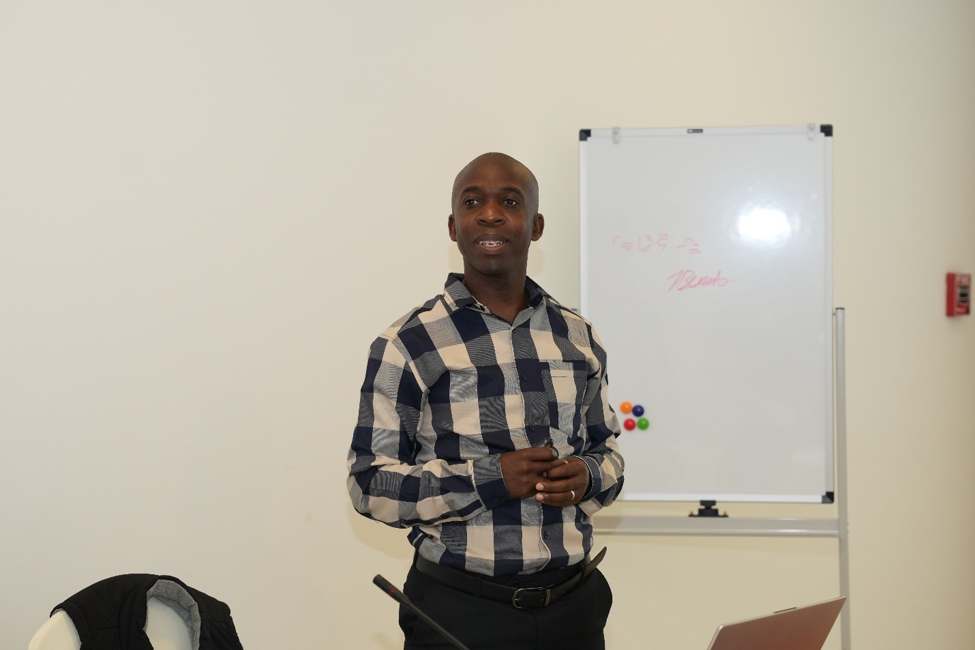
The BSI South Africa trainer facilitating the ISO 22000:2018 training programme.
From Requirements to Implementation
The second course, Food Safety Management System (FSMS) Implementation Training Course, was conducted over 4th and 5th August.
Having established a foundation in the requirements of ISO 22000:2018, participants moved into the practical aspects of implementing a Food Safety Management System.
The course introduced participants to a typical framework for implementing an FSMS and provided guidance on how an organisation can assess its current position through a baseline review. Participants also explored how to identify areas requiring adjustment and develop an implementation plan appropriate to their organisational circumstances.
An important aspect of the training was the development of the necessary documentation and approaches for monitoring FSMS. The course used an activity-based, delegate-centred approach, encouraging participants to share experiences, discuss situations and apply the information presented to workplace contexts.
This practical approach provided an opportunity for participants to move beyond simply understanding the requirements of the standard and consider how those requirements could be translated into actual organisational processes.
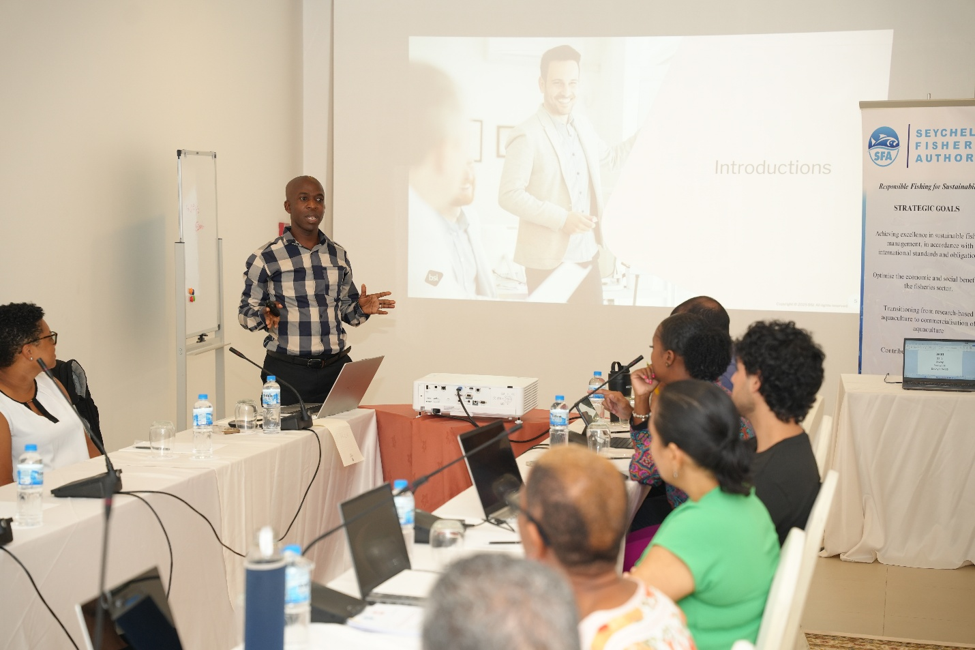
Participants following the training session during the FSMS Implementation course.
Learning Through Discussion and Practical Activities
A significant feature of the training was the opportunity for participants to work through activities and exchange ideas during the sessions.
The activity-based nature of the programme encouraged participants to consider practical situations, discuss possible approaches and relate the principles of food safety management to their own professional environments.
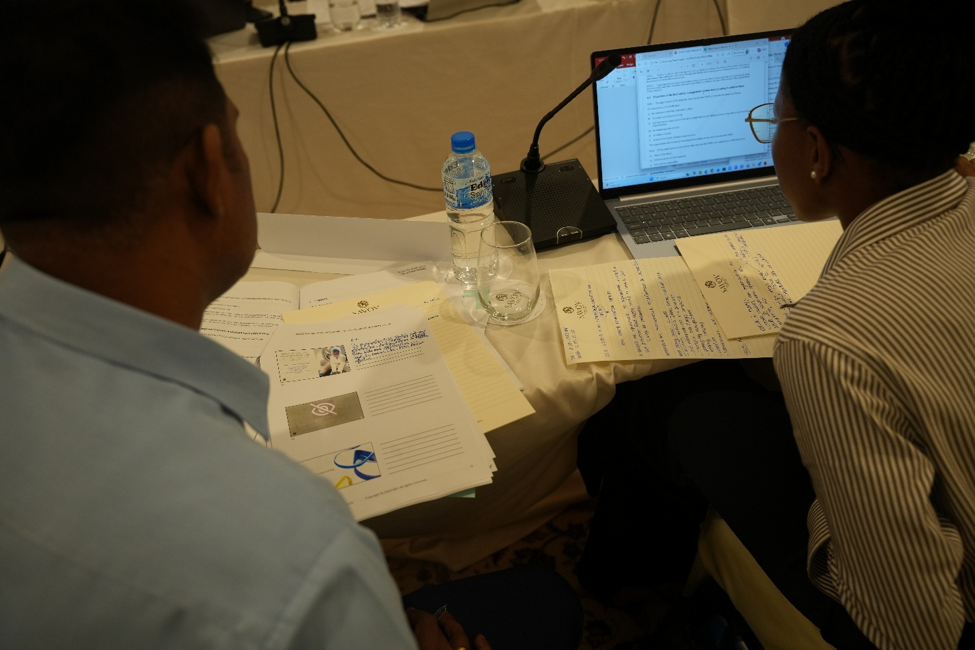
Mr. Vivek M. Vasu and Ms. Camilla Labonte engaged in discussion during one of the training activities.
Such activities provided an opportunity to reinforce the concepts presented by the trainer while encouraging collaboration, critical thinking and practical application.
Developing Internal Auditing Skills
The final two days of the programme, 6th and 7th August, focused on the Food Safety Management System (FSMS) Internal Auditor Training Course.
Internal auditing is an essential element of an effective Food Safety Management System. The course focused on developing the knowledge and skills required to assess and report on the conformity and implementation of processes based on ISO 22000.
Participants were introduced to the application of the ISO 19011 guidelines for management system auditing in the context of ISO 22000. The course covered the different stages of an internal audit, including:
- Initiating an audit;
- Preparing audit activities;
- Conducting audit activities;
- Preparing and distributing audit reports;
- Completing an audit; and
- Conducting audit follow-up activities.
The internal auditor component therefore complemented the first two courses by providing participants with an understanding of how an FSMS can be assessed to determine its conformity and effectiveness.
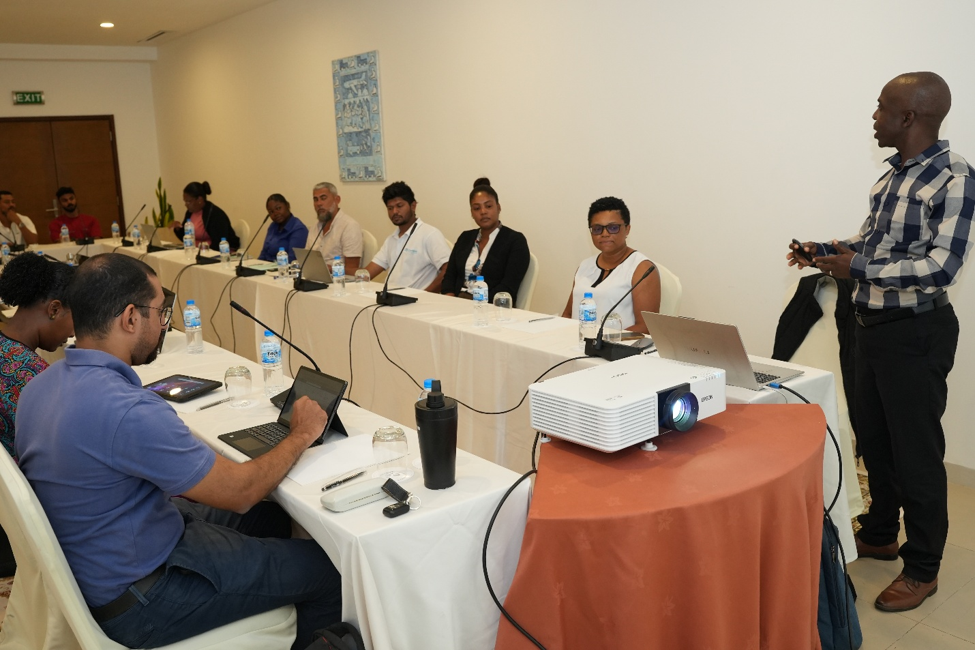
Participants during the FSMS Internal Auditor Training Course.
A Collaborative Learning Experience
Although the training covered technical requirements and auditing principles, the programme also provided an opportunity for professional interaction and knowledge sharing.
The delegate-centred approach encouraged participants to contribute to discussions and activities, share experiences and consider how the concepts covered during the training could be applied within their respective work environments.
For Mr. Vasu and Ms. Labonte, participation in the programme provided an opportunity to further develop their understanding of food safety management and to gain practical insight into the processes involved in establishing, implementing and auditing FSMS.
The experience also highlighted the importance of collaboration and continuous learning when working with internationally recognised management system standards.
Connecting the Training to Professional Practice
The knowledge gained through the three courses has relevance to areas such as food safety, fisheries, aquaculture, food processing and related activities.
For an institution such as SMA, where fisheries and maritime-related education and training form an important part of its activities, continued exposure to internationally recognised standards can contribute to strengthening staff competence and supporting the delivery of relevant and quality-focused education and training.
The training also provides a useful foundation for further professional engagement with food safety management systems and related quality assurance practices.
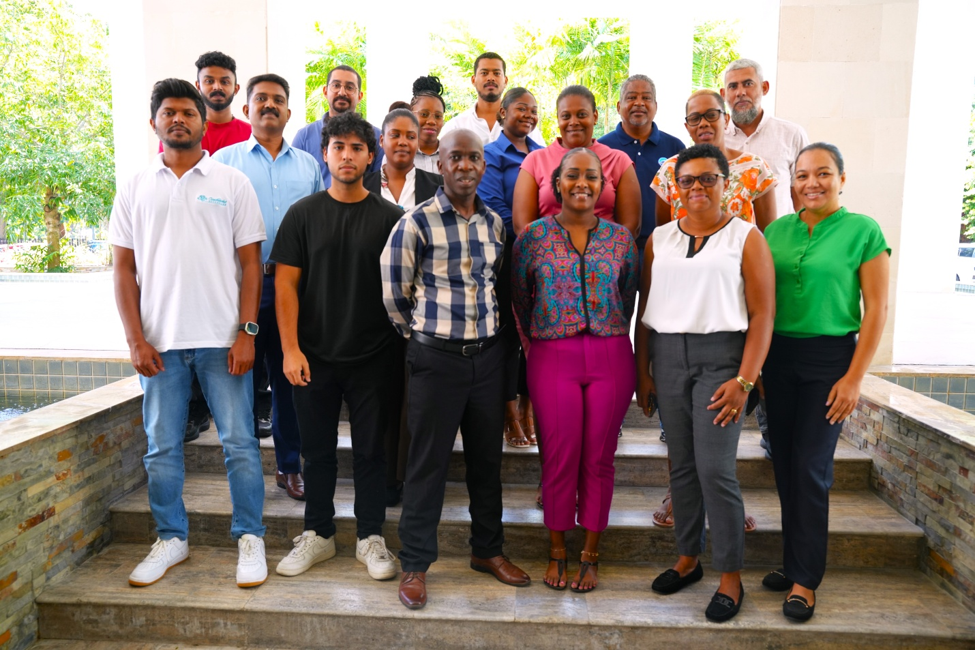
Mr. Vivek M. Vasu and Ms. Camilla Labonte with fellow participants and the BSI South Africa trainer following completion of the five-day training programme
From Training to Certification
Completion of the classroom training marks an important stage in the professional development process. However, participation in the courses does not in itself mean that the relevant certificates have already been awarded.
Following completion of the respective courses, participants are required to undertake an online examination for each course separately. The relevant certificates will be issued upon successful completion of the examination requirements.
This assessment process will provide an opportunity for the participants to demonstrate their understanding of the knowledge and skills covered during each of the three courses.
A Step Towards Continuous Professional Development
The five-day ISO 22000:2018 training programme represents a valuable professional development opportunity for SMA staff.
By completing three complementary courses covering requirements, implementation and internal auditing, Mr. Vasu and Ms. Labonte have gained exposure to the different stages of an effective Food Safety Management System.
The training reinforces the importance of continuous professional development and the need for staff to remain familiar with current standards, practices and approaches relevant to their areas of work.
SMA recognises that investment in staff development contributes not only to individual professional growth but also to the strengthening of institutional capacity. The knowledge and experience gained through programmes such as this can be shared with colleagues and, where appropriate, incorporated into teaching, training and workplace practices.
Appreciation
The Seychelles Maritime Academy extends its appreciation to the Seychelles Fisheries Authority (SFA) for organising this important training programme and to BSI South Africa for providing the specialised training in ISO 22000:2018 Food Safety Management Systems.
SMA also congratulates Mr. Vivek M. Vasu and Ms. Camilla Labonte on completing the five-day training programme and wishes them every success in the upcoming online examinations.
The Academy remains committed to supporting continuous professional development and strengthening the knowledge, skills and competencies of its staff in support of excellence in education, training and professional practice.