Victoria, Seychelles – 12 June 2026
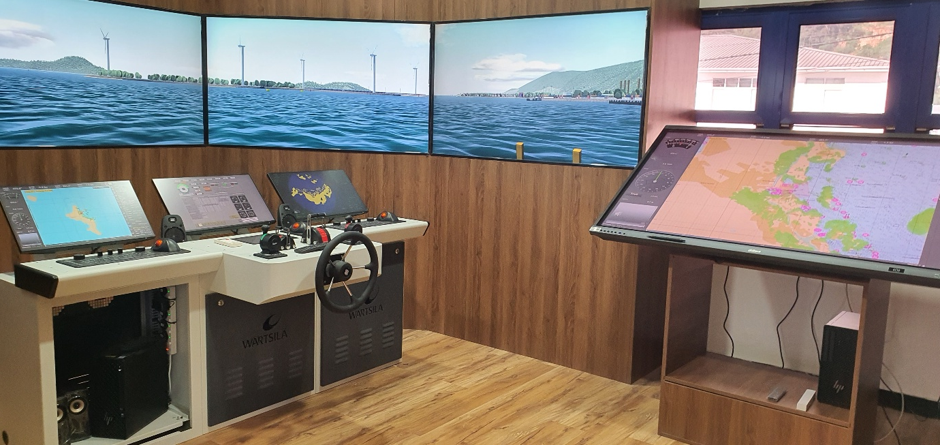
The Seychelles Maritime Academy (SMA) officially commissioned and inaugurated its new Integrated Marine Simulator Centre during a ribbon-cutting ceremony attended by distinguished national and international guests.
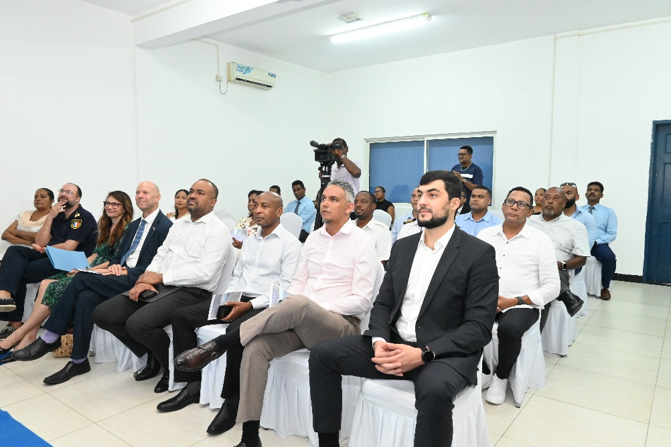
The ceremony was officiated by Mr Wallace Cosgrow, Minister for Fisheries, Agriculture and the Blue Economy, together with Mr Adham Loutfi, Chargé d’Affaires of the United States of America, and Mrs Anne Tallineau, Ambassador of France to Seychelles.

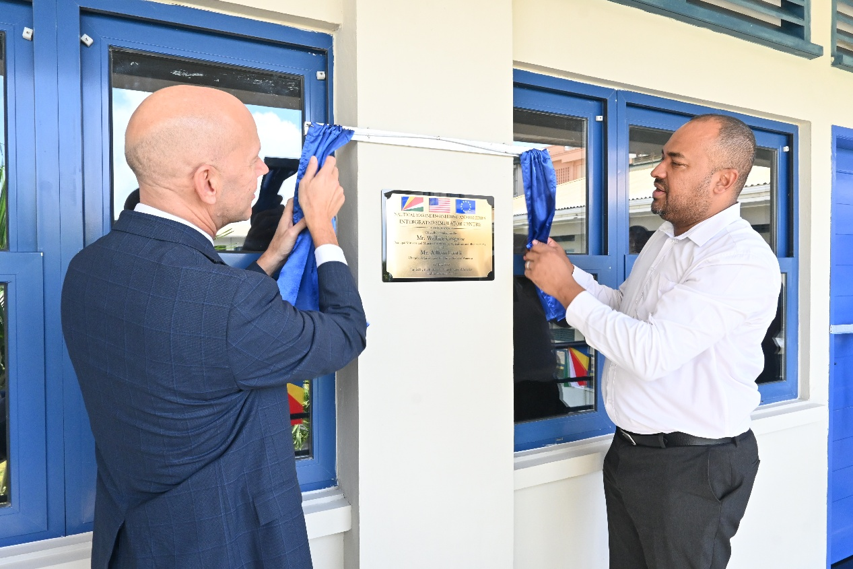
Principal Minister Cosgrow unveiling the plaque with the American Chargé d’ Affaire of the United States of America
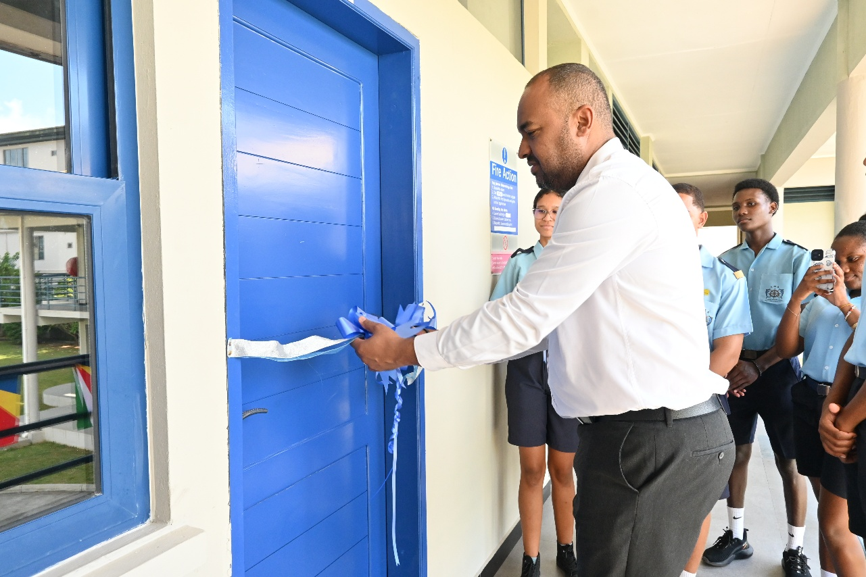
Principal Minister cutting the ribbon to the Simulator Room
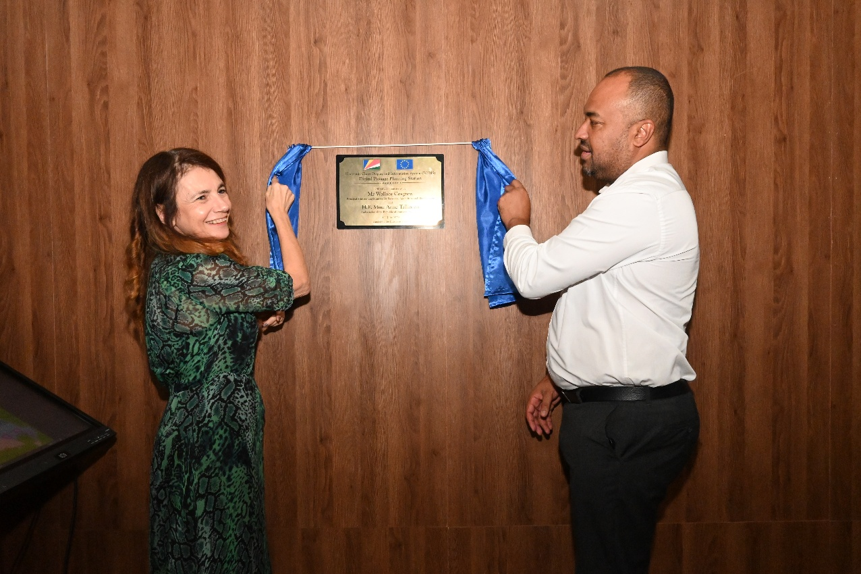
French Ambassador unveiling the plaque for the Digital Passage Planning Workstation
The facility significantly enhances the Academy’s capacity to deliver internationally recognised maritime education and training in accordance with the requirements of the International Maritime Organization (IMO) and the STCW Convention.
Comprehensive Training Capabilities
The new Integrated Marine Simulator Centre incorporates three specialised training platforms:
Marine Navigation Simulator
The bridge simulator replicates realistic bridge operations and vessel manoeuvring under a wide range of environmental conditions. Trainees can operate fully functional bridge equipment, including Electronic Chart Display and Information Systems (ECDIS), RADAR/ARPA, GPS, autopilot and GMDSS communications. The simulator enables training in ship handling, collision avoidance, search and rescue operations, restricted visibility navigation, heavy weather operations, and Bridge Resource Management (BRM).
Marine Engineering Simulator
The Engine Room Simulator models the operation of modern marine propulsion plants and auxiliary machinery. It allows trainees to practise engine start-up procedures, power management, fuel and cooling systems operation, ballast management, machinery troubleshooting, fault diagnosis, and fuel efficiency optimisation while promoting environmentally sustainable ship operations.
Fisheries Simulator
The fisheries training module provides realistic simulations of commercial fishing operations using hydroacoustic equipment, fish-finding technology, sonar systems, and deck machinery. Trainees can practise net deployment, trawling, purse seining, longlining, catch handling, refrigerated seawater (RSW) operations, and sustainable fishing techniques designed to minimise bycatch and improve fuel efficiency.
A unique feature of the facility is its 65-inch interactive Digital Passage Planning Workstation, providing learners with a collaborative environment for voyage planning, chart analysis, and navigational decision-making.
The simulators installed at the Seychelles Maritime Academy are internationally certified and comply with recognised maritime simulator standards, providing assurance of their quality, performance, and suitability for maritime education and training.
-
- Bridge Operation Simulator – Certified by DNV in accordance with the DNV Standard for Certification of Maritime Simulators (DNV-ST-033), June 2021, meeting the requirements for Class A, B, C, and D Bridge Simulator certification.
-
- Engine Room Simulator (ERS TechSim) – Certified by Nippon Kaiji Kyokai (ClassNK), one of the world’s leading classification societies, ensuring compliance with internationally recognised standards for engine room simulator training and assessment.
These internationally recognised certifications provide confidence that the Academy’s simulators meet the standards required to support training and assessment in accordance with the International Maritime Organization (IMO) Standards of Training, Certification and Watchkeeping for Seafarers (STCW) Convention, as amended.
International Collaboration The commissioning ceremony was attended by international partners, including Shahnbuz Talibov representing Wärtsilä and Myat Su Win representing UNOPS, whose organisations played important roles in the successful implementation of the project
Instructor Training and Certification
Prior to the commissioning, comprehensive instructor training was conducted by Captain Gaurav Bajaj, who delivered on-site navigation simulator training. Certificates were presented to the following SMA lecturers and maritime professionals:
Lee Tirant Stephane Barbe Michael Barbe Hubert Poiret Aubrey Ernesta Jimmy Port-Louis Marcus Payet Rashmith Mohottge Captain Mark Houreau (Seychelles Maritime Safety Authority) Marine Engineering Simulator instructor training was conducted online by Luc Lansiaux> from France.
Michael Francoise Andy Adrienne Parinda Vithanage Michael Gabrial (Seychelles Maritime Safety Authority) Kenneth Kilindo (Seychelles Maritime Safety Authority)
Recognition of Local Contractors
The Academy also recognised the valuable contribution of local contractors whose expertise ensured the successful completion of the project:
Andy Nicette – Carpentry and interior works
Cliff Marlow – LAN cabling and electrical installations
Jules Madeleine – Civil works coordination on behalf of Seychelles Maritime Academy
A Milestone for Maritime Education
The commissioning of the Integrated Marine Simulator Centre marks a significant milestone in strengthening Seychelles’ maritime education and training capabilities. The facility will enhance practical competency-based learning for cadets, marine engineers, fisheries officers, and seafarers while supporting the country’s commitment to safe navigation, sustainable fisheries, and compliance with international maritime standards. The Seychelles Maritime Academy expresses its sincere appreciation to the Government of the United States of America, the European Union, UNOPS, Wärtsilä, and all local partners whose collaboration made this transformational project possible